The Importance of Safety Engineering: A Growing Trend

It might be hard to conceive of a time when safety was not an important industry trend, but we do not have to look that far back. As modern systems become more complicated, the importance of safety engineering will only increase. But how do we specifically define safety engineering, and how has it changed throughout its existence?


The History of Safety Engineering

The definition of safety engineering should be obvious, but it refers to a branch of engineering that investigates systems and processes to ensure they maintain the correct standards. While we can find evidence of it in almost every area of engineering, it is of course most important with life-critical systems.

It relies on qualitative and quantitative data analysis to identify causal dependencies between system-wide hazards and individual component failure. A qualitative approach would typically focus on a question like, “What has to go wrong to cause a system failure?” while quantitative analysis focuses on probabilities and rates of failure.

This information is then used to prevent, mitigate, and manage risks to an acceptable level. Of course, this does not mean completely removing any risks, as that would not be possible. Instead, it means ensuring there is correct education and training to reduce incident rates and proper systems for dealing with a risk, should it occur.

As with any safety-related issue, the history of safety engineering was reactive rather than proactive. Back in the early 19th century, disasters related to steam explosions were commonplace. As technology improved, the main barrier to public acceptance was a poor safety record.

This, in part, was one of the prime drivers behind worker unionisation in the late 19th century. Around the same time, engineering societies added pledges of safety standards to their charters, as they realised it was the responsibility of engineers to analyse and manage systems.

In short, frequent disasters led engineers to ask why and to assess the problems within their systems. This led to design changes to reduce risk, and thus the industry of safety engineering was born.

During the 20th century, technology and systems became far more complex, which required more in-depth safety analysis. Something like nuclear technology is perhaps a prime example because the impact on human life from a disaster can be massive and the related hazards are myriad.

Modern systems will only serve to intensify the relationship between safety and engineering. As we move towards automated systems in things like cars and aircraft, the need for in-depth safety analysis and risk mitigation will only increase. Combine this with greater public awareness and expectation, and the need for safety engineering will be greater than ever.

But where is this heading in the future? Now that we have advanced computer systems, including AI and machine learning, safety engineering can be more proactive than reactive. We can switch to a model-based analysis method in which risks are identified and understood before they happen.

While we will never fully remove every risk, there is a greater range of options available. Cost/benefit analysis is a common method: at what point does the financial impact of a hazard outweigh the benefits a system offers?

For example, with something like eVTOLs, crashes will be inevitable. The job of a safety engineer is to assess and understand what will lead to a crash, mitigate the risks as much as possible, and balance this against the overall benefits eVTOLs will bring to local and global economies.

Self-driving cars present the same challenge. We have verified information available for the number of fatalities caused by human-driven cars (1,752 in the UK in 2019). So, for self-driving cars, do they need to be safer? If so, by how much? And how do we assess the cost/benefit ratio of designing an autonomous system that will be safer? By its very nature, its cost will outweigh its benefit, as it has a clear standard it needs to beat, and the technology for the current standard already exists.

This is not to say these systems will not be beneficial, because they will be. Rather, it highlights the intricate role of safety engineers in deciding how systems react together, the risks this presents, and how we use this data to design and adapt our modern technology.

The Trend for Safety in the MOD

If you were to look for jobs at the MOD, you would likely find a large number of safety engineering roles. But why has safety engineering become such a massive trend in recent years?

For a succinct answer, we could look back to the Nimrod Review. In 2006, an RAF Hawker Siddeley Nimrod aircraft crashed in Afghanistan, killing all 14 crewmembers. After a lengthy review, the inquiry found complacency around safety standards to be the primary cause.

At the time, safety roles were considered to be typically junior or graduate roles; something you needed to fill to tick a box. It generally was not appreciated how important safety engineering was to the overall functioning of systems and technology.

One major impact of the review was the establishment of the Military Aviation Authority (MAA). It helped to establish a greater network of safety engineers and specialists. However, due to safety not being the most glamorous job in aviation, many specialists fall into the role, which still leads to a skill shortage in key areas.

Share this article

KDC Projects Signs the Armed Forces Covenant

KDC Projects has formally signed the Armed Forces Covenant.

What is the UK’s Involvement in the AUKUS Deal?

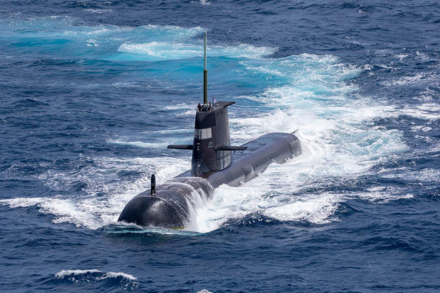
In March 2023, Australia joined the UK and US in a trilateral agreement to design and implement the next generation of nuclear submarines. Named the SSN-AUKUS deal, it’ll see Australia and the UK’s current fleets of Astute and Collins class submarines replaced by the same model. This has the potential to be a ground-breaking agreement for creating the future of underwater defence. To understand more, let’s look at the deal in more detail and the UK’s role in it.

WEAF Conference & Expo 2025

Last week, KDC Projects took part in the WEAF Annual Conference & Expo 2025 at the Winter Gardens Pavilion in Weston-super-Mare.